
16 octobre 2026
Wearin’ a achevé l’essai final du système SYNERGISE, un projet de recherche international réunissant 16 partenaires pour développer un ensemble de ressources intégrées permettant de gérer les catastrophes naturelles et les catastrophes causées par l’homme.
The test took place from October 12 to 16, 2026, at the Fighting City police testing site in Berlin, Germany, and brought together all the technologies from across the SYNERGISE tech partners to test how they perform as a single system in a complex Search & Rescue scenario.
Guests and stakeholders observed a large-scale disaster scenario involving an explosion, multiple collapsed buildings, fire, and dense smoke. Data from robots, drones, wearable devices, and positioning systems were combined in real time, giving first responders a clearer picture of the situation so they could assess risks, make decisions, and coordinate faster.
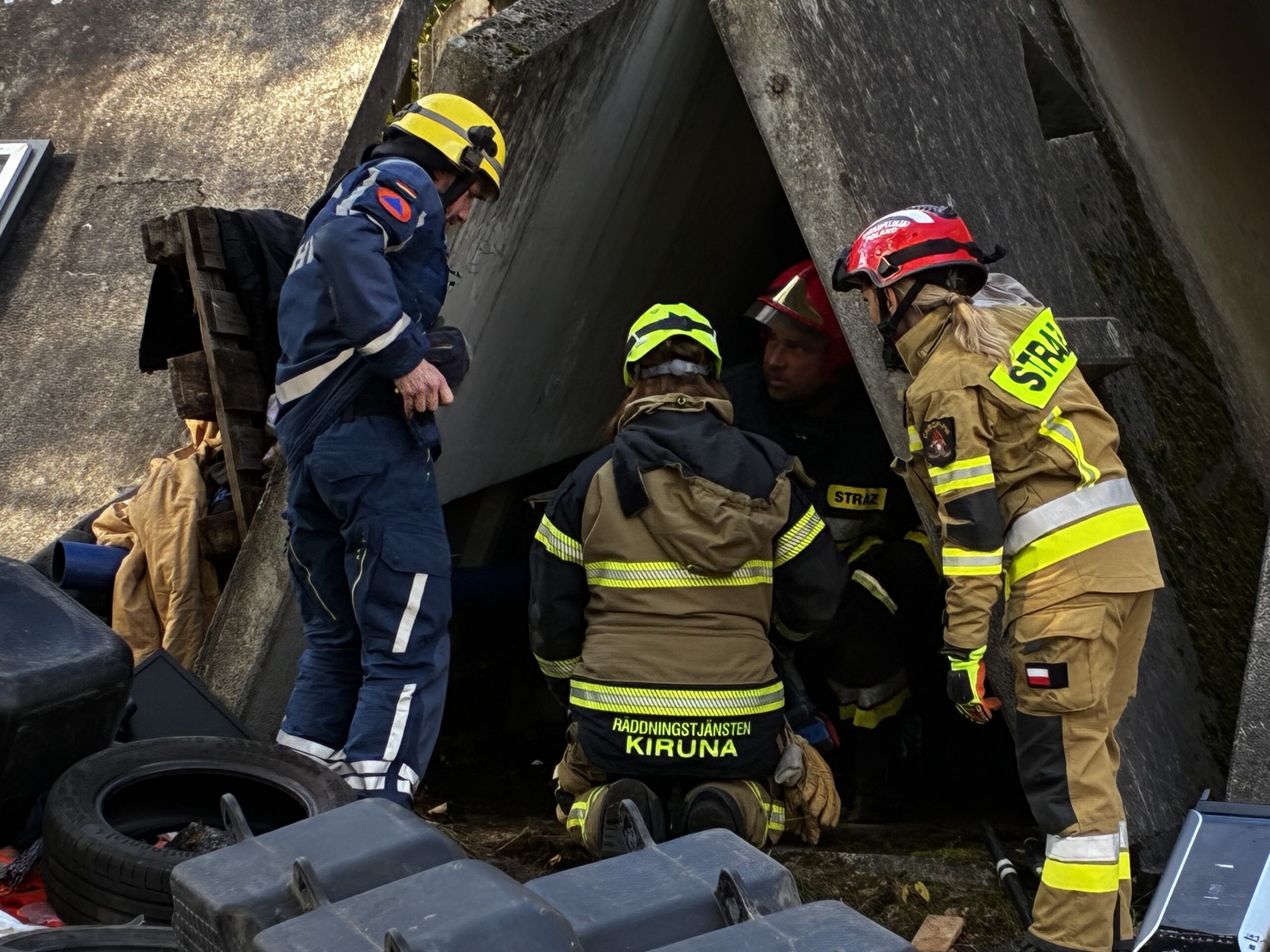 Search & Rescue scenario at the Fighting City testing site in Berlin
Wearin’ equipped 12 firefighters and first responders from Greece, Sweden, Germany, Poland, and Kurdistan. This allowed the consortium to evaluate personnel monitoring under realistic operating conditions.
Wearin’s solution was at the heart of the response system, combining environmental and physiological monitoring capabilities such as:
By combining indoor geolocation from SYSNAV magneto-inertial trackers with continuous monitoring of responders’ physiological status, environmental conditions, Man Down alerts and SOS alarms, team leaders gain a comprehensive operational picture. This situational awareness is further enriched by data from drones and other connected technologies.
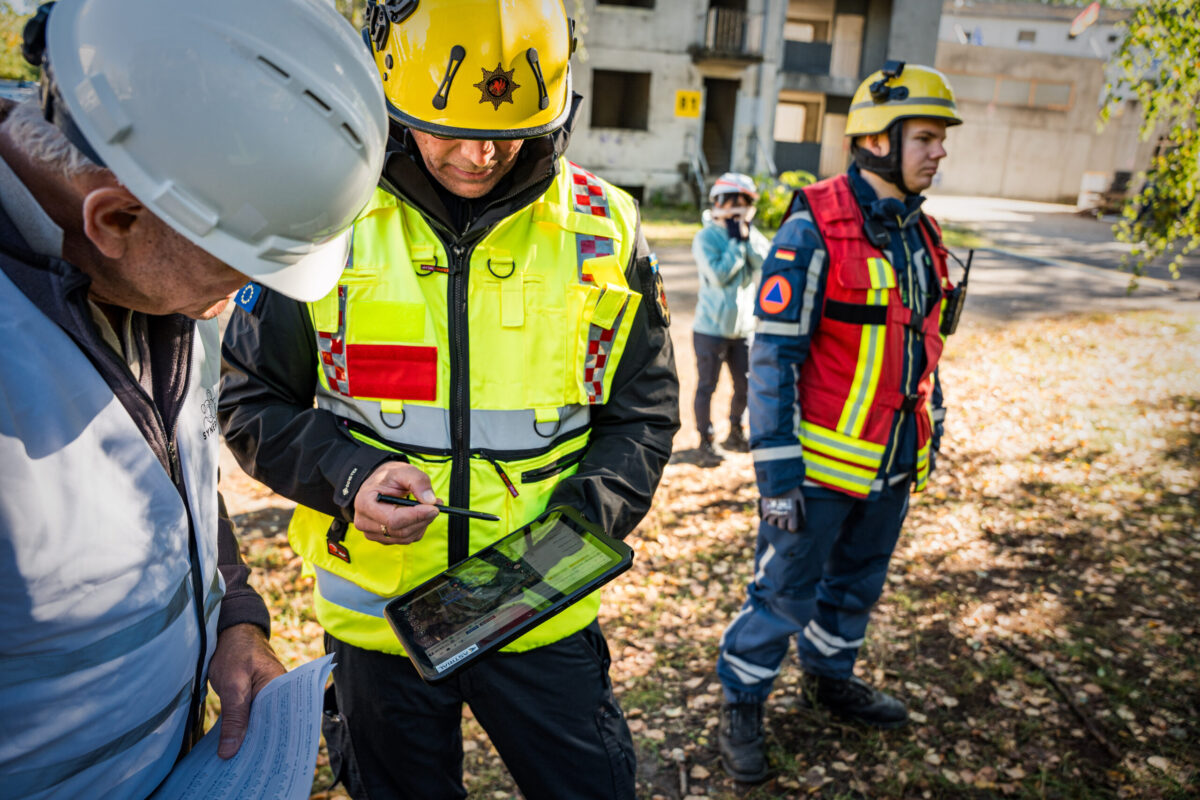 Team leaders coordinating the response using real-time data
Displayed in real time on ASTRIAL’s ENGAGE Command & Control platform, this critical field data enabled disaster operations commanders to oversee teams deployed across multiple sectors during cascading crisis events, while enhancing the safety of responders operating in high-risk conditions.
In such complex environments, this level of situational awareness can prove critical and even life-saving.
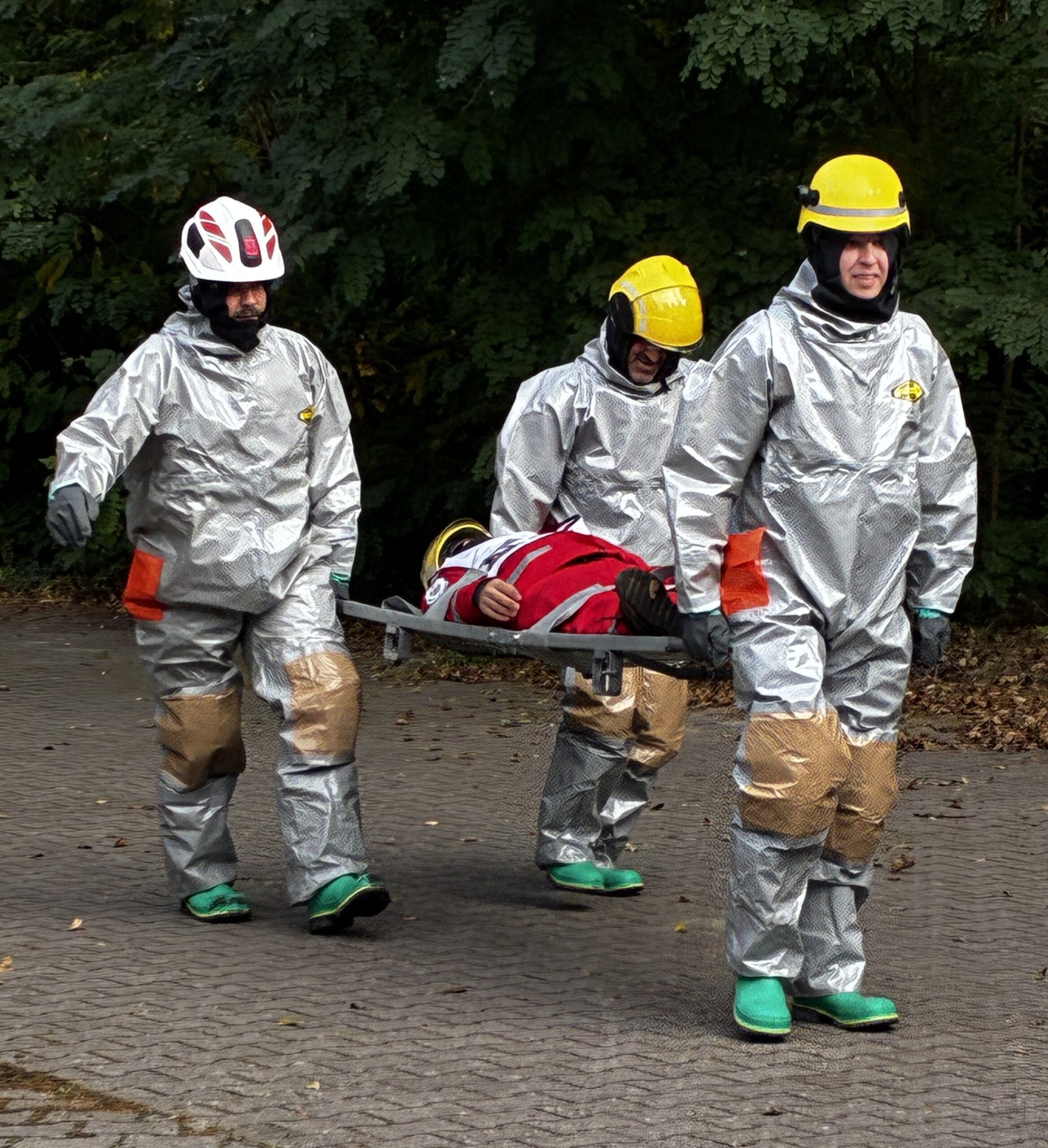 First responders taking part in the final SYNERGISE field test
A core goal of SYNERGISE is turning data into information responders can act on. Wearin’s Physiological Strain Index (PSI) was developed to translate complex physiological measurements into a simple Level 1-to-10 score reflecting a responder’s level of physiological heat strain. To make this information even easier to interpret in operational environments, several indices are further aggregated into a simple Low / Medium / High risk indicator displayed on an intuitive dashboard. This gives the team leader an immediate view of a responder’s overall condition, enabling them to determine when agents may require assistance or should be withdrawn from the operation.
The PSI algorithm has been fine-tuned and can be personalized to each user, helping teams quickly spot personnel who may be under excessive physical strain.
Effective coordination among response teams is critical during an incident, as is seamless interoperability between the technologies deployed in the field.
The Wearin’ system was tested alongside all SYNERGISE technologies, including ANYmal robotic platforms from ETH Zurich, a SNAKE telescopic robotic arm equipped with a camera developed by Japanese-based partners, a remote-controlled arm able to manipulate objects and operate valves, and OWL LiDAR-equipped drones from a Norwegian research laboratory for building indoor mapping and environmental assessment.
“The Wearin’ solution performed reliably throughout the exercise and proved essential in the search and rescue operations in combination with the other technologies developed and tested within SYNERGISE,” said Mathilde Bensimhon, Project Manager and Integration Engineer at Wearin’. “We are very proud to see that Wearin’ proved its reliability and capacity to interface with existing sensors, aggregating data and integrating it into our ecosystem while ensuring reliable data transmission.”
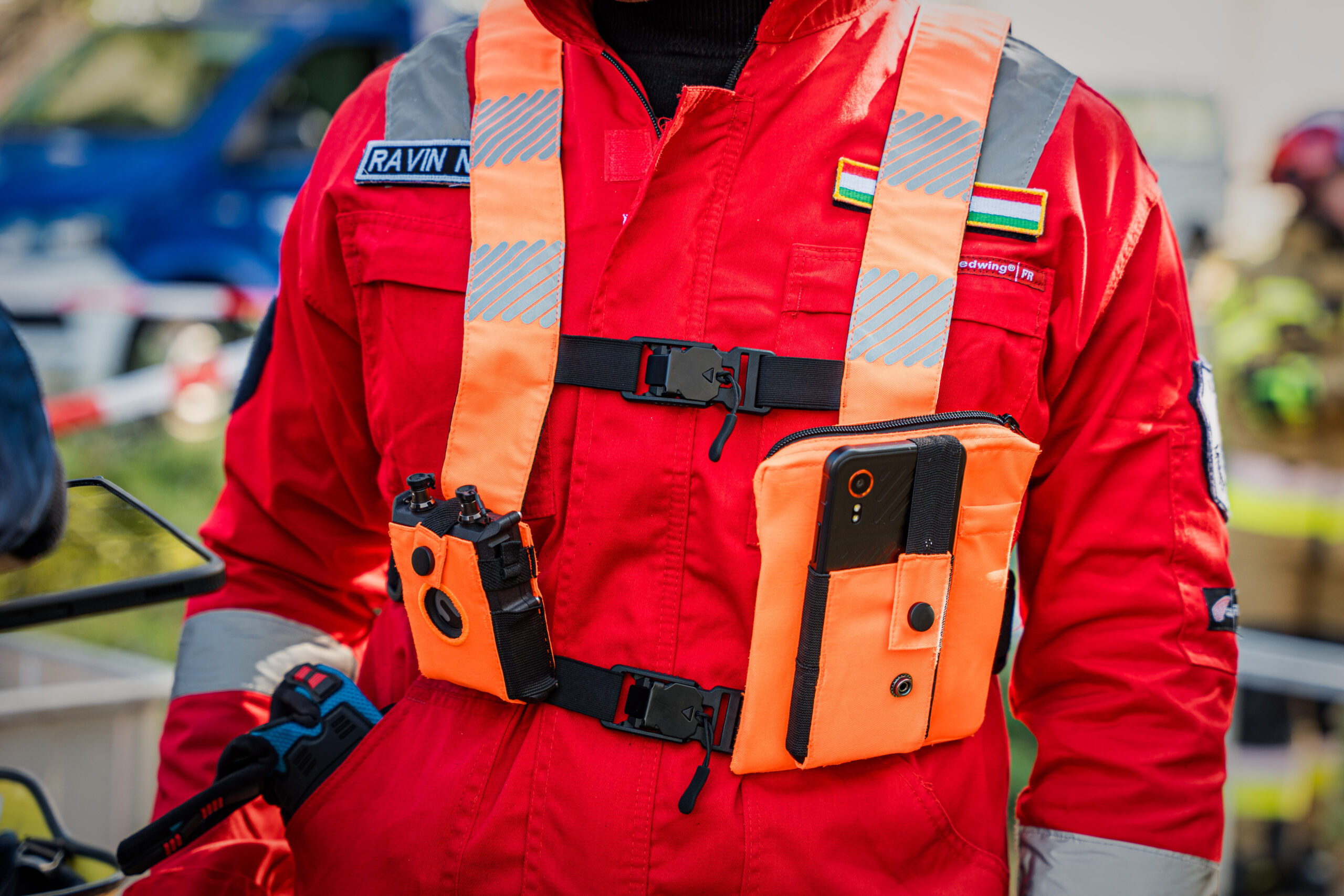 Firefighters equipped with Wearin’ wearables during the exercise
Feedback from SYNERGISE partners and participating responders was also consistently positive across four key domains.
Data-Driven Decision Making. The system’s value lies not in collecting data for its own sake, but in turning it into information that supports real-time decisions. Insights from the data can reveal signs of excessive strain before they become critical. Team leaders can then intervene earlier, reduce risks, and keep firefighters operating safely whenever conditions permit. Delivering the right information to the right person at the right time is among the most significant benefits of the Wearin’ solution.
Personal Safety & Health Monitoring. Continuous physiological monitoring contributes directly to responder safety. It can be difficult for a first responder to withdraw from an ongoing operation when their help is still needed and to recognize when fatigue and physical stress have reached unsafe levels. Objective indicators add a layer of protection by flagging when an individual may become a risk to themselves or to the mission. In remote or resource-constrained environments, where every available responder counts, preserving personnel health and operational capacity can decide the outcome of an operation.
Operational Efficiency & Coordination. Field data brings benefits beyond the live incident. Historical mission data can improve training, refine procedures, and optimize resource allocation, and lessons from past incidents can become practical safety rules that help prevent future accidents. Combining automated distress alerts, biometric data, and precise location tracking in a single operational view is essential. It lets commanders make faster, potentially life-saving decisions during complex incidents.
System Usability & Integration. Users recognized significant potential in the technology, while emphasizing that operational adoption depends on simplicity and seamless integration into existing procedures. New tools must complement established workflows rather than add complexity in the field. While some adaptations were identified as necessary before large-scale deployment, partners agreed that the solution offers strong prospects for the future, particularly if it continues to evolve toward an increasingly streamlined, integrated, and operationally relevant user experience.
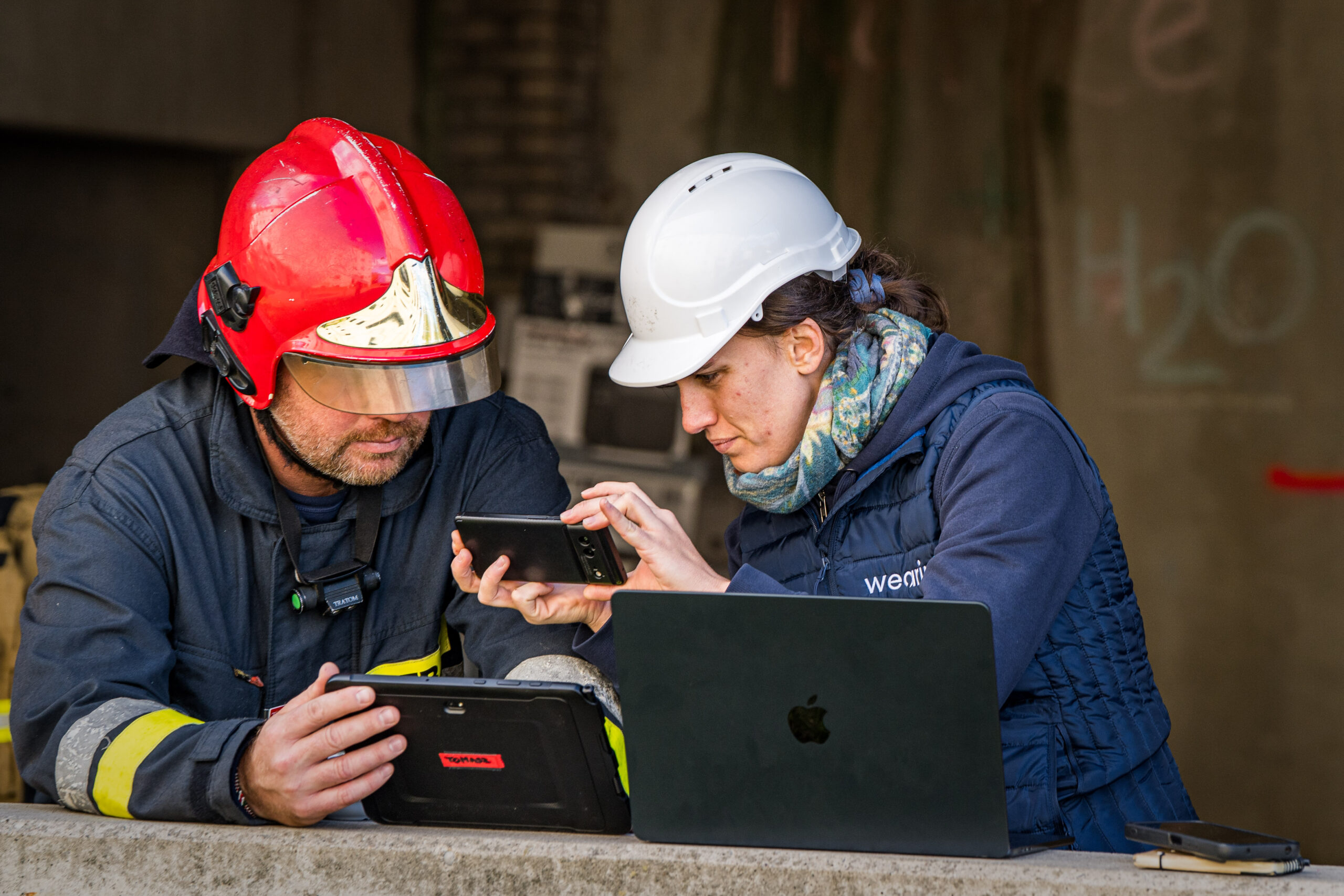 Wearin’ team supporting a firefighter on-site with real-time monitoring data
Maxime Projetti, Director of Wearin’, has a concrete view of the final milestone of the SYNERGISE project: “Here in Berlin, it was extremely rewarding to see Commanders, team leaders, experienced firefighters and Search & Rescue units immediately recognize the value our solution brings to operational awareness for safer operations in complex degraded environments.
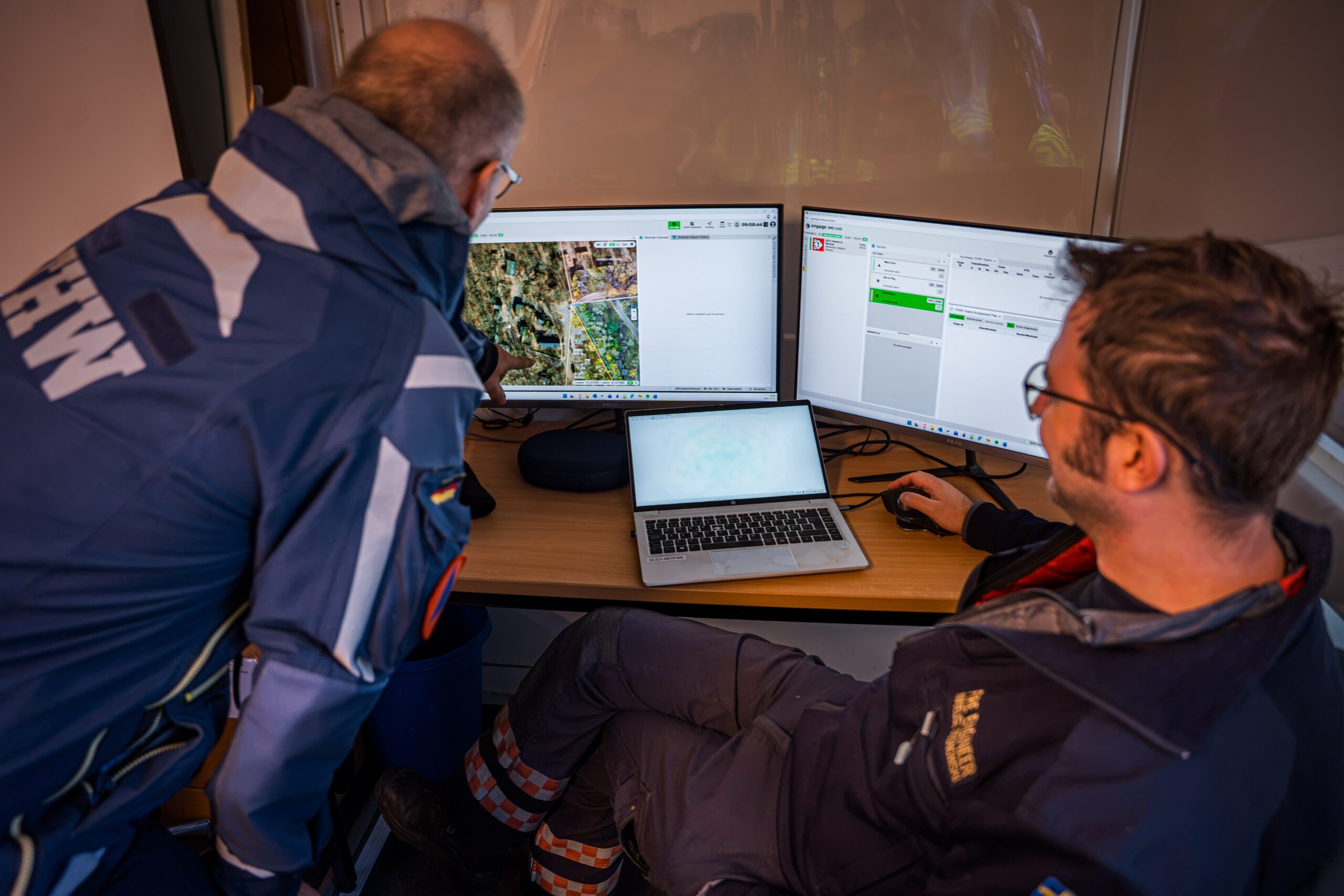 Real-time field data displayed on the Command & Control platform
This value has been long validated in the field by the Monaco Fire and Rescue Department (Corps des Sapeurs-Pompiers de Monaco, CSPM), with whom Wearin’ engineers have been working closely to deploy an innovative all-in-one IoT platform that is going operational in the coming months. Projetti added: “The final SYNERGISE test confirmed that our solution meets the requirements defined with first responders and performs reliably under realistic operational conditions. Some of its capabilities, such as the Man Down function and the SOS button, are already in operational use by the CSPM.”
SYNERGISE runs from September 2023 to February 2027 and unites partners from Europe, Japan, and South Korea.
As the project approaches its conclusion, the Berlin exercise demonstrated how wearables, robotics, drones, and advanced positioning technologies can operate as a single coordinated ecosystem to enhance responder safety and support more effective disaster management.
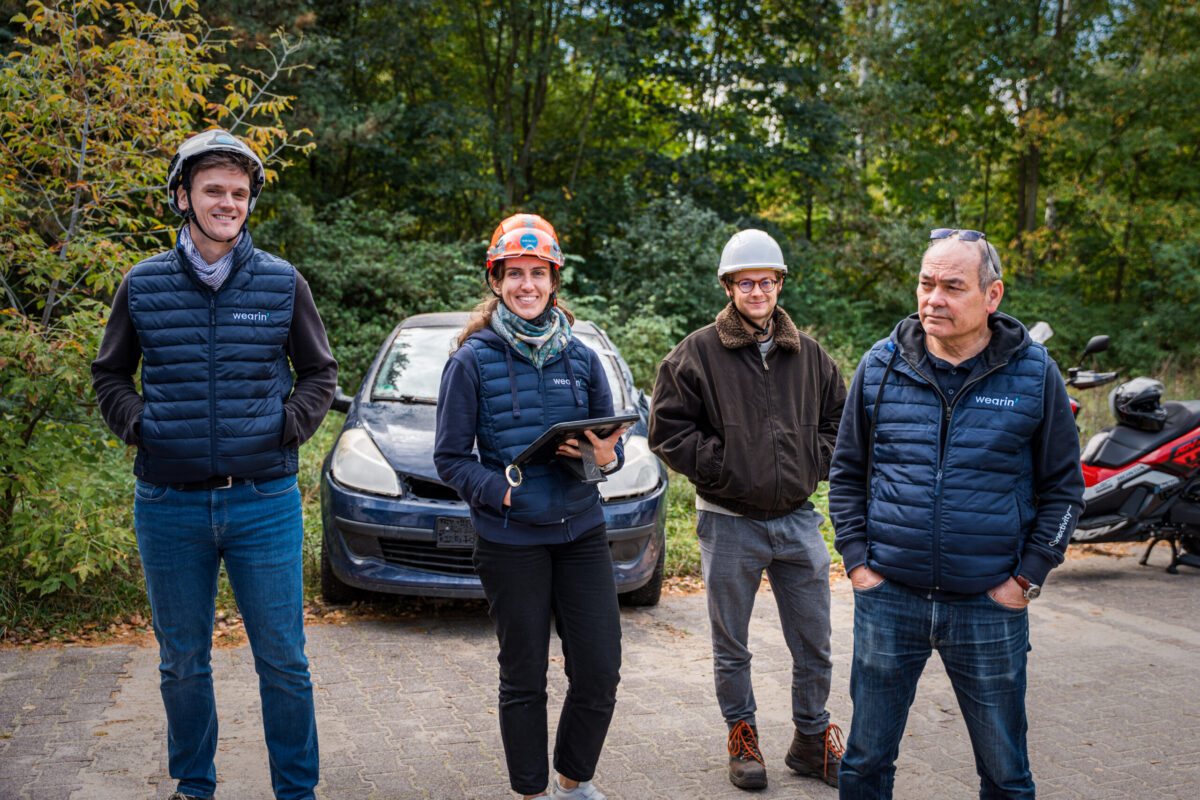 From left to right: Maxime Projetti, Wearin’ Director; Mathilde Bensimhon, Wearin’ Project Manager / Integration Engineer; Arthur Babu, SYSNAV Embedded Software Design Engineer; Lien Pham, Wearin’ Business Development Manager
________________
About SYNERGISE
Sixteen organizations from eleven countries are collaborating in the SYNERGISE project, led by Germany’s Federal Agency for Technical Relief (THW), to develop a “system of systems” that enhances the safety, efficiency, and coordination of first responders during natural and human-made disasters, while strengthening capabilities to locate and assist missing persons. Partners are working across borders to advance global disaster response capabilities. The project is co-funded by the European Union’s Horizon Europe research and innovation program, the Swiss State Secretariat for Education, Research and Innovation (SERI), the Japan Science and Technology Agency, the Korean Ministry of Science and ICT, and the Electronics and Telecommunications Research Institute of Korea (GA 101121321). SYNERGISE began on September 1, 2023, and will run until February 28, 2027.